Painful or Stiff Big Toe Joint
The function of the toes, especially the big toe, is to help us balance and propel us forward during walking or running.
A painful stiffening big toe joint (Hallux Limitus) and a stiff big toe joint (Hallux Rigidus) are commonly occurring conditions of degenerative arthritis (a wearing out of surfaces) affecting the big toe joint. According to research, Hallux Limitus/Rigidus normally develops between the ages of 30 to 60 years, occurring more commonly among men than women . The condition results over time from constant wear and stress or from an injury to the joint. The result of the condition is pain, swelling, and/or restriction of movement (Hallux Limitus); eventually, the sufferer will stop bending the joint completely (Hallux Rigidus). Women will have to stop wearing shoes with high heels.
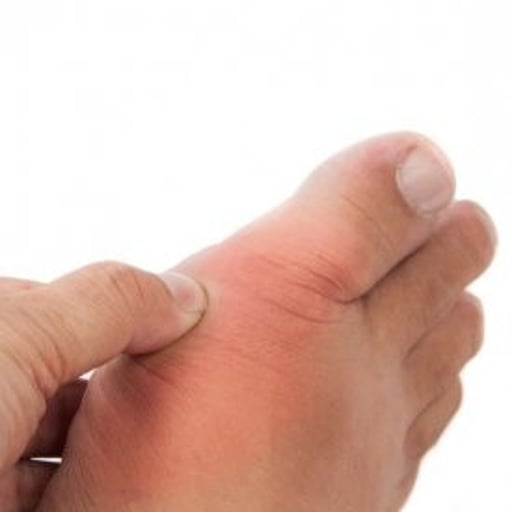
Signs & Symptoms
Hallux Limitus can often produce the following symptoms at the big toe joint:
Painful reduced movement, sometimes jamming or sticking.
Creaking, cracking or grinding noise when moving
Pain when tapping/stubbing the big toe
Localised redness, inflammation and swelling
Difficulty in finding footwear that doesn’t irritate the big toe
Difficulty when walking as movement is painful and/or limited, preventing the big toe to bend, not allowing the foot to “roll through” while walking.
Changes the way you walk, affecting your gait often causing foot, ankle, knee, hip and back pain
Can produce osteoarthritic changes in the foot, ankle, knee and spine.
Hallux Rigidus can often produce the following symptoms at the big toe joint:
Complete loss of movement that is normally painless at the big toe joint itself.
Often causes difficulty in finding footwear to accommodate the stiff big toe joint.
Changes the way you walk, affecting your gait, often causing foot, ankle, knee, hip and back pain
Can produce osteoarthritic changes in the foot, ankle, knee and spine.
Causes
There are tremendous stresses put onto the big toe joint (a force equal to twice one’s body weight). If the forces are excessive or if the joint isn’t healthy, eventually the joint surface simply begins to wear out.
Causes can include but are not limited to:
Poorly fitting footwear
Poorly fitting protective safety boots. they can cause significant damage to the big toe joint.
Pointy toed shoes, slip on shoes and high heels also damage the big toe joint.
Hallux Limitus / Rigidus can also result from an injury or as a complication of another medical condition, such as gout or infection. It can also result from mechanical or anatomical problems in the foot and ankle, excessive pronation (rolling in) of the ankles, as well as toe deformities, which increase the stress on the joint.
Recent endoscopic findings have also attributed a reduced range of motion (ROM) to the big toe joint secondary to damage at the tendon of the Flexor Hallucis Longus tendon as it runs adjacent to the Sesamoids that are like little knee caps that run underneath the big toe joint in little grooves called Cresta, which are positioned underneath the Distal Condyle of the 1st Metatarsal Shaft. The damaged, frayed tendon slips in between the Sesamoid and Cresta effectively “jamming” the movement of the joint.
A reduced viscosity, (slipperiness) of your synovial fluid (joint fluid) within your big toe joint can also predispose you to advanced wear and tear, degenerative osteoarthritic changes of the big toe (Hallux Limitus/Hallux Rigidus). The quality of the cartilage, the quality of the blood supply to the joint capsule and metatarsal head can also affect your big toe health and function.
Dietary factors can also play a part, increased use of alcohol, smoking / vaping all negatively impact on your body’s general health, including the health of your big toe joint.
Diagnosis
The correction of any foot disorder is dependent on the practitioner understanding the cause of that disorder.
Our specialist podiatrist, Stefan, is highly qualified and experienced with over 30 years of clinical practice. His knowledge and experience enables his to offer a thorough, in-depth assessment of your condition..
An effective medical history will be taken that can often determine the presence of Hallux Limitus.
Specialist examination to help determine the exact location of your pain can help for an effective treatment management plan.
A biomechanical assessment and gait analysis can also be used.
Hallux Limitus and Rigidus can be aggravated by your footwear. Your footwear will be assessed.
If the circulation at your forefoot is questionable, a colour doppler ultrasound can be used to assess blood flow.
In some cases, haematological tests or a referral to MRI may be required.
Once a diagnosis is determined; he will spend time to fully explain your condition, providing treatment options aimed at providing you with long-term pain relief for your specific condition.
Treatment
Hallux Limitus and Rigidus can be aggravated by your footwear. Your foot wear will be assessed. If this is the case a footwear recommendation can be made.
Hallux Limitus and Hallux Rigidus can be related to your foot shape and the way in which your foot moves when you walk or stand (a biomechanical abnormality). If this is the case the use of prescription orthotics and change of footwear may be recommended.
As a form of degenerative arthritis, treatment may begin with anti-inflammatory medication to alleviate the pain and inflammation. However long-term use of this type of medication for the treatment of Hallux Limitus is not indicated. Please consult our podiatrist or your GP before you take medication.
Other treatments and recommendations can include but are not limited to:
Change of activity
Targeted stretching regimes to reduce forefoot pressure
Reduction of body weight
The use of dietary supplements aimed at reducing inflammation, please ask you Podiatrist, Naturopath, GP or Pharmacist for advice
Reduction or stop drinking alcohol
Eating a balanced diet, eating whole foods, avoiding processed food and sugar.
Referrals to an Osteopath, Acupuncturist, Chiropractor or Physiotherapist
Prevention
The exact aetiology of Hallux Limitus is unknown however genetic predisposition plays a significant role in this condition.
Ensuring your footwear fits you correctly. Its sounds obvious but ensure your foot wear is foot shaped. Make sure it fits, suits the shape of your foot, rather than having to “wear in” the shoe or boot to fit your foot. Take the inner out of your shoe or boot, draw around it on a piece of paper and then stand on this outline while wearing socks. If your foot reaches beyond the borders of this outline, then the shoe or boot is too small for you, or the wrong shape.
It is crucial for those patients who suffer from gout to continue the use of their prevention medication if they are to avoid irreparable damage to their big toe joints. If they do suffer a “gouty attack”, keep the joint still and take anti-inflammatory medication (as indicated by their family doctor) and if needed, request a consultation with a consultant Rheumatologist to help organise a long-term treatment management plan.
If you suffer from gout, prevention is far better than cure.
For those who do not suffer from gout, other non-invasive measures can be taken to help reduce the risk of Hallux Limitus. This can include but is not limited to:
Rest, this allows the healing and the inflammation and pain to subside
The use of prescription orthotics to off load the painful area
Change of foot wear to lower heels or shoes.
Stiff bottomed / soled shoes can provide relief as they limit the grinding at the big toe joint, however these can also cause the a joint to stick, so this advice doesn’t apply to every case.
Change of activity
Targeted stretching regimes to reduce forefoot pressure
Reduction of body weight
The use of dietary supplements aimed at reducing inflammation. Please ask you Podiatrist, Naturopath, GP or Pharmacist for advice
Reduction or stop drinking alcohol
Stop smoking or vaping. They reduce the blood flow and nutrients to your feet.
Eating a balanced diet, eating whole foods, avoiding processed food and sugar.
The short-term use of non-steroidal anti-inflammatories. Please ask your Podiatrist or GP before using these