Ingrown Toenails
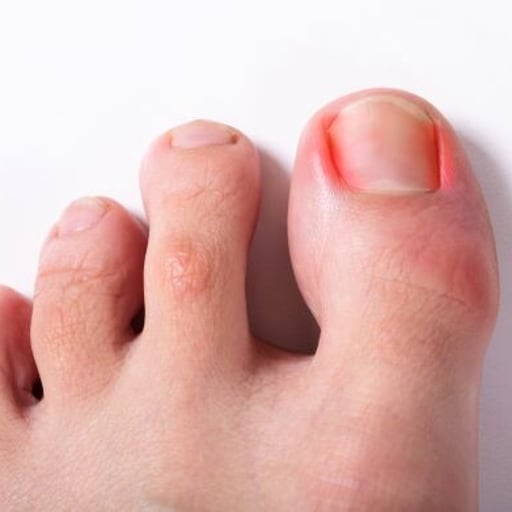
When a toenail is ingrown, it can often curve and grow into the skin at the sides of the nail (Ungulabia). In certain cases the nail can also grow into the skin at the end of the toe (Hyponychium).
It is 8 times more likely for males to suffer from ingrown nails in comparison to females. Male adolescents are at the highest risk of suffering from this condition.
Signs & Symptoms
When a toenail is ingrown, it can often curve and grow into the skin at the sides of the nail .
The nail portion that is “digging in” damages the skin, often creating pain, redness, swelling, and warmth in the toe.
If an ingrown nail causes a break in the skin, bacteria may enter and cause an infection in the area, which is often marked by clear drainage or yellow puss with a foul odour. However, even if the toe isn’t painful, red, swollen, or warm, a nail that curves downward into the skin can progress to an infection.
Causes
Causes of ingrown toenails include:
Heredity
In many people, the tendency for ingrown toenails is inherited.Trauma
Sometimes an ingrown toenail is the result of trauma, such as stubbing your toe, having an object fall on your toe, or engaging in activities that involve repeated pressure on the toes, such as kicking or running.Improper trimming
The most common cause of ingrown toenails is cutting your nails too short. This encourages the skin next to the nail to fold over the nail.Improperly sized footwear
Ingrown toenails can result from wearing socks and shoes that are tight or short.Nail Conditions
Ingrown toenails can be caused by nail problems, such as fungal infections.
Diagnosis
While an ingrown nail may appear a simple disorder, a physical examination of the affected toe is vital to enable our podiatrist to visualise the exact cause.
Our specialist podiatrist, Stefan, is highly qualified and experienced with over 30 years of clinical practice. His knowledge and experience enables him to offer a thorough, in-depth assessment of your condition.
Sometimes an X-ray is required if an underlying bony cause is suspected. This could include the presence of a Subungual Exostosis (a bony cartilaginous benign growth) underneath the nail plate, that distorts the nail plate, pinching the soft-tissue underneath the nail plate and on top of the Distal Phalanx, producing acute pain upon gentle compression.
Once a diagnosis is determined, he will spend time to fully explain your condition, providing treatment options aimed at providing you with a long-term pain relief for your specific condition.
Treatment
After examining the toe, our specialist podiatrist, Stefan, will select the treatment best suited for you. If an infection is present, an oral antibiotic may be required.
Sometimes a minor surgical procedure to remove the offending portion of ingrown nail is required. This helps to ease the pain and resolve the infection at the toe. After administering a local anaesthetic, the part of the affected portion of nail can be painlessly removed. This procedure is called a Partial Nail Avulsion or PNA for short. Following this nail procedure, a light bandage will be applied. Most people experience very little pain after surgery and may resume normal activity the next day.
Prevention
Avoid attempting "bathroom surgery". Repeated cutting of the nail can cause the condition to worsen over time. If your symptoms fail to improve, it's time to seek professional help.
Many cases of ingrown toenails may be prevented by:
Proper trimming. Cut toenails in a fairly straight line, and don’t cut them too short. You should be able to get your fingernail under the sides and end of the nail.
Well-fitted shoes and socks. Don’t wear shoes that are short or tight in the toe area. Avoid shoes that are loose, because they to cause pressure on the toes, especially when running or walking down hill, running or walking briskly.
What you should know about home treatment
Don't cut a notch in the nail. Contrary to what some people believe, this does not reduce the tendency for the nail to curve downward.
Don't repeatedly trim nail borders. Repeatedly trimming does not change the way the nail grows, and can make the condition worse.
Over-the-counter medications are ineffective. Topical medications may mask the pain, but they don't correct the underlying problem.