Heel Pain
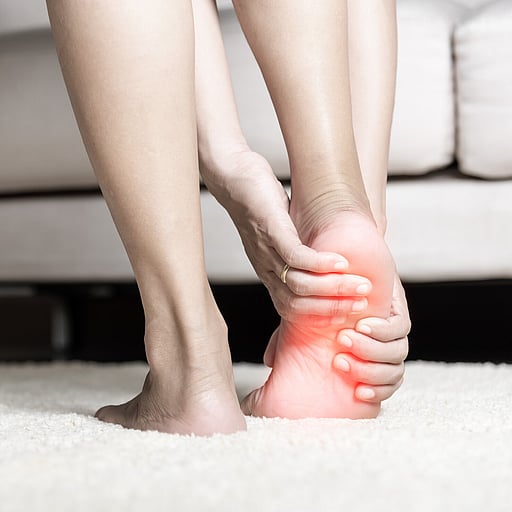
Heel pain can develop gradually over time.
OVERVIEW
As you will read, heel pain is a common foot disorder that affects thousands of New Zealanders. Ask your friends - I bet one of them has suffered from, or knows someone who has suffered from this disorder.
Pain in the heel area or can be caused by many factors. I hope the information within our website will enable you to better understand your condition and seek appropriate treatment. If you do have any questions please contact my rooms direct and we will do our best to help.
For further advice or to make an appointment, please contact one of our professional team, our numbers and contact details are listed on the Contact page.
As you will read, heel pain is a common foot disorder that affects thousands of New Zealanders. Ask your friends - I bet one of them has suffered from, or knows someone who has suffered from this disorder.
Pain in the heel area or can be caused by many factors. I hope the information within our website will enable you to better understand your condition and seek appropriate treatment. If you do have any questions please contact my rooms direct and we will do our best to help.
For further advice or to make an appointment, please contact one of our professional team, our numbers and contact details are listed on the Contact page.
SIGNS & SYMPTOMS
The major complaint of those with Plantar Fasciitis is pain and stiffness in the bottom of the heel. This develops gradually over time. It usually affects just one foot, but can affect both feet. Some people describe the pain as dull, while others experience a sharp pain, and some feel a burning or ache on the bottom of the foot extending outward from the heel.
The pain is usually worse in the morning when you take your first steps out of bed, or if you’ve been sitting or lying down for a while. Climbing stairs can be very difficult due to the heel stiffness. After prolonged activity, the pain can flare-up due to increased inflammation.
Pain is not usually felt during the activity, but rather just after stopping.
For further advice or to make an appointment, please contact one of our professional team, our number and contact details are listed on the Contact page.
The major complaint of those with Plantar Fasciitis is pain and stiffness in the bottom of the heel. This develops gradually over time. It usually affects just one foot, but can affect both feet. Some people describe the pain as dull, while others experience a sharp pain, and some feel a burning or ache on the bottom of the foot extending outward from the heel.
The pain is usually worse in the morning when you take your first steps out of bed, or if you’ve been sitting or lying down for a while. Climbing stairs can be very difficult due to the heel stiffness. After prolonged activity, the pain can flare-up due to increased inflammation.
Pain is not usually felt during the activity, but rather just after stopping.
For further advice or to make an appointment, please contact one of our professional team, our number and contact details are listed on the Contact page.
CAUSES
The Plantar Fascia, or to be more precise, the Planar Aponeurosis, is a strong bowstring-like ligament that runs from the Calcaneus (heel bone) to the tip of the foot. It is the most superficial band of connective tissue running along the bottom of the foot that helps support the arch.
As the arch starts to flatten and the foot absorbs the weight of the body, these structures work to maintain the arch and stabilize the foot and all help to propel us, enabling weight bearing. Normally, they accomplish this effortlessly. However, sometimes the tension stress, the load they take, is beyond their structural limit. This excessive tension can lead to damage, tearing these structures resulting in associated inflammation and pain. For this reason Plantar Fasciitis is often referred to as a “traction deformity”.
The damage/micro-injury in heel pain is often located at the proximal portion of the Plantar Aponeurosis, in particular its medial calcaneal attachment, resulting in a portion of the many micro-fibres that make up the ligamental tissue of the Plantar Aponeurosis to break/snap, at this point.
If the heel pain, damage is left, the inflammation, increased blood flow, at this heel attachment can promote bone cells (osteoblasts) to start to deposit bone onto the damaged area. It is thought that this is the bodies attempt to try and strengthen the damaged area. Over time this bone cell deposition can grow and can be seen on X-ray investigations as a heel spur.
For further advice or to make an appointment, please contact one of our professional team, our numbers and contact details are listed on the Contacts Page.
The Plantar Fascia, or to be more precise, the Planar Aponeurosis, is a strong bowstring-like ligament that runs from the Calcaneus (heel bone) to the tip of the foot. It is the most superficial band of connective tissue running along the bottom of the foot that helps support the arch.
As the arch starts to flatten and the foot absorbs the weight of the body, these structures work to maintain the arch and stabilize the foot and all help to propel us, enabling weight bearing. Normally, they accomplish this effortlessly. However, sometimes the tension stress, the load they take, is beyond their structural limit. This excessive tension can lead to damage, tearing these structures resulting in associated inflammation and pain. For this reason Plantar Fasciitis is often referred to as a “traction deformity”.
The damage/micro-injury in heel pain is often located at the proximal portion of the Plantar Aponeurosis, in particular its medial calcaneal attachment, resulting in a portion of the many micro-fibres that make up the ligamental tissue of the Plantar Aponeurosis to break/snap, at this point.
If the heel pain, damage is left, the inflammation, increased blood flow, at this heel attachment can promote bone cells (osteoblasts) to start to deposit bone onto the damaged area. It is thought that this is the bodies attempt to try and strengthen the damaged area. Over time this bone cell deposition can grow and can be seen on X-ray investigations as a heel spur.
For further advice or to make an appointment, please contact one of our professional team, our numbers and contact details are listed on the Contacts Page.
DIAGNOSIS
Diagnosis is primarily based on history and physical examination.
Patients may present with heel pain with their first steps in the morning or after prolonged sitting, and sharp pain with palpation of the medial plantar calcaneal region. Discomfort in the proximal plantar fascia can be elicited by passive ankle/first toe dorsi flexion.
Diagnostic imaging is rarely needed for the initial diagnosis of Plantar Fasciitis. Use of ultrasonography and magnetic resonance imaging(MRI) is reserved for recalcitrant cases or to rule out other heel pathology.
Ultrasonography findings that support the diagnosis of Plantar Fasciitis include proximal plantar fascia thickness greater than 4 mm and areas of hypoechogenicity.
Magnetic resonance imaging (MRI), although expensive, can be a valuable tool for assessing causes of recalcitrant heel pain. Diagnostic findings include increased proximal plantar fascia thickening with increased signal intensity on T2-weighted and short tau inversion recovery images.
For further advice or to make an appointment, please contact one of our professional team, our numbers and contact details are listed on the Contacts Page.
Diagnosis is primarily based on history and physical examination.
Patients may present with heel pain with their first steps in the morning or after prolonged sitting, and sharp pain with palpation of the medial plantar calcaneal region. Discomfort in the proximal plantar fascia can be elicited by passive ankle/first toe dorsi flexion.
Diagnostic imaging is rarely needed for the initial diagnosis of Plantar Fasciitis. Use of ultrasonography and magnetic resonance imaging(MRI) is reserved for recalcitrant cases or to rule out other heel pathology.
Ultrasonography findings that support the diagnosis of Plantar Fasciitis include proximal plantar fascia thickness greater than 4 mm and areas of hypoechogenicity.
Magnetic resonance imaging (MRI), although expensive, can be a valuable tool for assessing causes of recalcitrant heel pain. Diagnostic findings include increased proximal plantar fascia thickening with increased signal intensity on T2-weighted and short tau inversion recovery images.
For further advice or to make an appointment, please contact one of our professional team, our numbers and contact details are listed on the Contacts Page.
TREATMENT
Surgical intervention is normally utilised after all non-invasive treatments have failed to offer relief. Our podiatrist is able to provide a range of non-invasive treatments. Please refer to the "Prevention" section of "Heel Pain" to learn more about non-invasive approaches.
For further advice or to make an appointment, please contact one of our professional team, our numbers and contact details are listed on the Contacts Page.
Surgical intervention is normally utilised after all non-invasive treatments have failed to offer relief. Our podiatrist is able to provide a range of non-invasive treatments. Please refer to the "Prevention" section of "Heel Pain" to learn more about non-invasive approaches.
For further advice or to make an appointment, please contact one of our professional team, our numbers and contact details are listed on the Contacts Page.
PREVENTION
Stretching is the best non-invasive treatment for Plantar Fasciitis. It may help to try to keep weight off your foot until the initial inflammation goes away. You can also apply ice to the sore area for 20 minutes, three or four times a day, to relieve your symptoms. Often a doctor may prescribe pain relief. Home exercises to stretch your Achilles tendon and plantar fascia are the mainstay of treatment and reduce the chance of recurrence.
In one exercise, you lean forward against a wall with one knee straight and heel on the ground. Your other knee is bent. Your heel cord and foot arch stretch as you lean. Hold for 10 seconds, relax and straighten up. Repeat 20 times for each sore heel. It is important to keep the knee fully extended on the side being stretched.
In another exercise, you lean forward onto a counter top, spreading your feet apart with one foot in front of the other. Flex your knees and squat down, keeping your heels on the ground as long as possible. Your heel cords and foot arches will stretch as the heels come up in the stretch. Hold for 10 seconds, relax and straighten up. Repeat 20 times.
About 90 percent of people with Plantar Fasciitis improve significantly after two months of initial treatment. You may be advised to use shoes with shock-absorbing soles, or be fitted with an off-the-shelf shoe insert device like a rubber heel pad. Your foot may be taped into a specific position.
If your Plantar Fasciitis continues after a few months of conservative treatment, your doctor may inject your heel with steroidal anti-inflammatory medication.
If you still have symptoms, you may need to wear a positional splint when you sleep. In severe case you may need to wear a walking cast for two to three weeks or a positional splint when you sleep to enable the symptoms to reduce.
Plantar Fascia-Specific Stretching Program
Perform at least three sets of stretches per day. You cannot perform the stretch too often. The most important times to stretch are before taking the first step in the morning and before standing after a period of prolonged sitting.

Anti-inflammatory Medication
Anti-inflammatory medications can help decrease the inflammation in the arch and heel of your foot. Be sure to check with our podiatrist or your GP before you commence any use of anti-inflammatory medications.
Arch Support
Additional Stretch: Calf Stretch
For further advice or to make an appointment, please contact one of our professional team, our number and contact details are listed on the Contacts Page.
Stretching is the best non-invasive treatment for Plantar Fasciitis. It may help to try to keep weight off your foot until the initial inflammation goes away. You can also apply ice to the sore area for 20 minutes, three or four times a day, to relieve your symptoms. Often a doctor may prescribe pain relief. Home exercises to stretch your Achilles tendon and plantar fascia are the mainstay of treatment and reduce the chance of recurrence.
In one exercise, you lean forward against a wall with one knee straight and heel on the ground. Your other knee is bent. Your heel cord and foot arch stretch as you lean. Hold for 10 seconds, relax and straighten up. Repeat 20 times for each sore heel. It is important to keep the knee fully extended on the side being stretched.
In another exercise, you lean forward onto a counter top, spreading your feet apart with one foot in front of the other. Flex your knees and squat down, keeping your heels on the ground as long as possible. Your heel cords and foot arches will stretch as the heels come up in the stretch. Hold for 10 seconds, relax and straighten up. Repeat 20 times.
About 90 percent of people with Plantar Fasciitis improve significantly after two months of initial treatment. You may be advised to use shoes with shock-absorbing soles, or be fitted with an off-the-shelf shoe insert device like a rubber heel pad. Your foot may be taped into a specific position.
If your Plantar Fasciitis continues after a few months of conservative treatment, your doctor may inject your heel with steroidal anti-inflammatory medication.
If you still have symptoms, you may need to wear a positional splint when you sleep. In severe case you may need to wear a walking cast for two to three weeks or a positional splint when you sleep to enable the symptoms to reduce.
Plantar Fascia-Specific Stretching Program
- Cross your affected leg over your other leg.
- Using the hand on your affected side, take hold of your affected foot and pull your toes back towards shin. This creates tension/stretch in the arch of the foot/plantar fascia.
- Check for the appropriate stretch position by gently rubbing the thumb of your unaffected side left to right over the arch of the affected foot. The plantar fascia should feel firm, like a guitar string.
- Hold the stretch for a count of 10. A set is 10 repetitions.
Perform at least three sets of stretches per day. You cannot perform the stretch too often. The most important times to stretch are before taking the first step in the morning and before standing after a period of prolonged sitting.
Anti-inflammatory Medication
Anti-inflammatory medications can help decrease the inflammation in the arch and heel of your foot. Be sure to check with our podiatrist or your GP before you commence any use of anti-inflammatory medications.
Arch Support
- Over the counter inserts provide added arch support and soft cushion.
- Based on the individual needs of your foot, you may require custom inserts.
Additional Stretch: Calf Stretch
- Place a shoe insert under your affected foot.
- Place your affected leg behind your unaffected leg with the toes of your back foot pointed towards the heel of your other foot.
- Lean into the wall.
- Bend your front knee while keeping your back leg straight with your heel firmly on the ground.
- Hold the stretch for a count of 10. A set is 10 repetitions.
- Perform the stretch at least three times a day.
For further advice or to make an appointment, please contact one of our professional team, our number and contact details are listed on the Contacts Page.